Complete Guide to Shades of Blue
Discover every name, code, and meaning — from soft sky tones to deep navy elegance
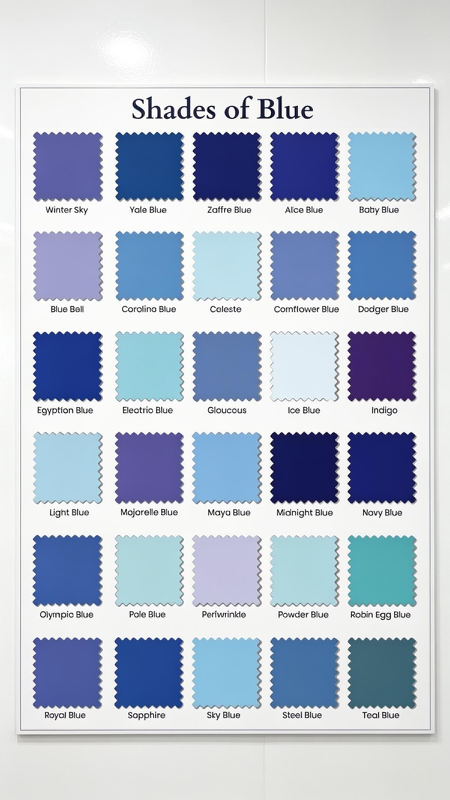
Blue is the most beloved, most used, and most recognizable color in the world. It is everywhere: in the sky, the ocean, nature, branding, design, and art. But what many people do not know is that blue is not just one color — it is an entire family of shades, tones, and hues ranging from the softest pale sky blue to the deepest, darkest midnight navy. In this complete guide, I will walk you through every single shade of blue shown in the chart, explain exactly what they look like, their names, codes, and best uses for designers, artists, and anyone who loves color.
Different shades = different feelings!
Full List: 30 Beautiful Shades of Blue Explained
Below is every shade from the chart, organized row by row, with description and identity. This is the ultimate reference list you can save and use forever.
Row 1: Soft & Deep Royal Tones
Muted purple-blue, cool and calm like a cold sky.
Deep, rich medium blue — classic academic & professional.
Very dark, intense blue — historic, luxurious, deep.
Soft medium blue, very elegant, named after “Alice”.
Famous light, pale blue — innocence, softness, calm.
Row 2: Medium & Bright Blues
Pale greyish blue — soft, dusty, muted, very gentle.
Bright, light-medium blue — famous sports & university color.
Very pale sky blue — heavenly, airy, almost white-blue.
Soft blue with purple hint — classic flower color.
Vibrant, bright blue — energetic, sporty, bold & clear.
Row 3: Rich, Deep & Unique Blues
Historic dark blue — first synthetic pigment, ancient luxury.
Neon bright cyan-blue — modern, striking, energetic.
Greyish blue — soft, cool, muted, natural plant tone.
Almost white, very pale blue — cold, clean, icy feel.
Deep blue-purple — rich, spiritual, dark rainbow shade.
Row 4: Light, Purple & Midnight Shades
Standard soft blue — calm, open, friendly, very common.
Vibrant purple-blue — famous garden color, artistic.
Bright sky blue — historic Mayan art color, durable.
Very dark blue — almost black, deep night sky, elegant.
Classic dark blue — professional, formal, trust, navy uniform.
Row 5: Sporty, Pale & Greenish Blues
Strong medium blue — official games color, prestige.
Soft, washed-out blue — calm, vintage, gentle feel.
Pale blue-purple — flower color, dreamy, soft pastel.
Very light grey-blue — soft, dusty, classic vintage.
Greenish blue — natural bird egg color, fresh & unique.
Row 6: Royal, Precious & Industrial Blues
Bright, rich blue — luxury, royalty, confidence & boldness.
Deep jewel blue — precious stone, rich, expensive & elegant.
True medium sky blue — open, free, clear, optimistic.
Greyish medium blue — strong, industrial, reliable & solid.
Blue-green mix — unique, calm, modern, sophisticated.
Blue Shades: Grouped by Tone
To make it easier to choose, here is how these shades are grouped by feeling and brightness:
- Light & Pale Blues: Baby Blue, Ice Blue, Pale Blue, Powder Blue, Celeste, Light Blue — best for backgrounds, soft designs, calm themes, weddings, babies.
- Medium & Bright Blues: Carolina Blue, Dodger Blue, Electric Blue, Royal Blue, Sky Blue — best for branding, logos, websites, sports, attention-grabbing.
- Deep & Dark Blues: Navy, Midnight, Yale, Sapphire, Egyptian Blue — best for formal design, luxury, text, trust, corporate, elegance.
- Unique & Mixed Blues: Indigo, Teal, Robin Egg, Majorelle, Periwinkle — best for art, fashion, creativity, uniqueness.
Why Blue Is The #1 Color Worldwide
Blue is the favorite color of over 50% of people globally — more than red, green, or any other color. Why?
- It is the color of the sky and ocean: universal, natural, and familiar.
- It psychologically signals trust, safety, intelligence, and calm — which is why banks, tech companies, and healthcare brands use blue (Facebook, IBM, Visa, Samsung, hospitals).
- Light blue feels open and friendly; dark blue feels serious and reliable.
- It matches almost every other color: pairs perfectly with white, grey, gold, orange, or pink.
Final Summary
From the softest Baby Blue to the deepest Midnight Blue, every shade in this chart has its own personality, history, and best use. Whether you are designing a website, painting, choosing clothes, decorating, or just learning colors, knowing these names and shades helps you speak the language of color perfectly.
Save this guide — it is your complete reference to the beautiful world of blue.